

Crypto trading becomes more meaningful when your costs stay small and your results stay clear. Low trading fees matter because they shape your long term return in a direct way. You feel the impact each time your order fills, especially when you place several trades during the week. Now here is the thing. Only a few US exchanges keep trading costs low while still offering strong liquidity, solid protection, and a layout that feels comfortable on both desktop and mobile.
This guide explains how trading fees work, why they matter, and how you can select a platform that reduces your cost without affecting your safety. As you know, the market moves constantly, due to which a clear understanding of fees becomes important. You can track your performance using the Crypto PnL Calculator on CryptoCalculate.net when you want organized numbers for every entry and exit.
How Trading Fees Work in the US
US exchanges follow a model that rewards liquidity. When you place an order that waits on the order book, you act as a maker. When your order fills instantly, you act as a taker. Maker fees usually remain lower. Taker fees usually remain higher because they require immediate execution.
What Influences Your Fee Cost
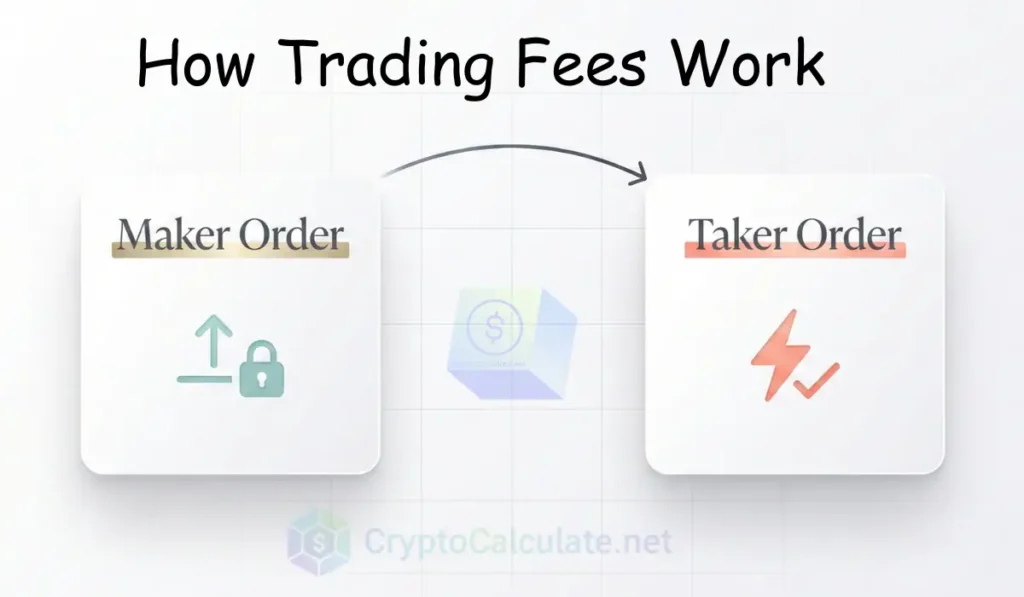
- Maker fees
- Taker fees
- Spread impact
- Deposit charges
- Withdrawal charges
- Margin funding cost
You can study market depth on CoinGecko when you want a clear view of liquidity and price movement.
Why US Traders Focus on Fee Levels
US exchanges operate under strict compliance rules, which helps create transparency around fee structures. You can view the maker and taker tables easily and understand exactly how much your trades cost. It also helps during tax season when you calculate your return using the Crypto ROI Calculator on CryptoCalculate.net.
Types of Fees You Should Understand
- Maker Fees: Maker orders add liquidity to the order book. These orders usually keep the lowest cost on most platforms.
- Taker Fees: Taker orders remove liquidity and fill instantly. They usually cost more than maker orders.
- Spread Impact: The spread represents the gap between the highest bid and the lowest ask. Narrow spreads help you keep more of your return. Wide spreads push your cost higher.
- Deposit Fees: ACH deposits usually cost nothing. Bank wires may include a charge depending on the provider.
- Withdrawal Fees: Crypto withdrawals depend on blockchain activity and may change during heavy load periods.
- Margin Funding Cost: Platforms that offer margin attach funding charges. These charges vary based on market movement.
Why Low Fees Matter for You
Low fees matter because small percentages influence your total output over time. You notice the effect when you use different trading styles.
- Short term trades
- Swing entries
- Midcap activity during volatility
- Frequent deposits or withdrawals
Reduced cost supports your progress no matter how you trade.
The Best Low Fee Crypto Exchanges in the United States
1. Binance US
Binance US stands out for low trading fees and steady execution speed. The engine moves fast and spreads remain narrow during active hours. I tested short trades on BTC USD during a quiet afternoon and the fills came smoothly with minimal cost. This level of consistency attracts many active traders.
Key Features
- Spot trading with strong liquidity
- Fast chart updates
- Clean layout
- Volume based fee structure
Supported Assets
More than eighty major and midcap assets.
Protection Structure
- Two factor authentication
- Cold storage
- Verified reserves reports
You can check global price charts and volume trends on CoinMarketCap for a broader market view.
Fee Table
| Exchange | Maker Fee | Taker Fee |
|---|---|---|
| Binance US | Very low | Very low |
Best For
Active spot traders who want strong liquidity with low overall cost.
2. Kraken
Kraken carries a long history in the crypto market and is known for stability. Many traders rely on it because the order book stays firm even when sudden market swings appear. The interface feels technical at first, but experienced traders appreciate its structure.
Key Features
- Spot markets
- Margin tools
- Advanced charting on Kraken Pro
- Smooth order flow
Supported Assets
More than eighty assets with a mix of major and midcap categories.
Protection Structure
- High cold storage ratio
- Strong internal monitoring
- Clean security record
You can explore research and security insights on the Chainalysis blog at https://blog.chainalysis.com for deeper industry context.
Fee Table
| Exchange | Maker Fee | Taker Fee |
|---|---|---|
| Kraken | Low | Moderate |
Best For
Users who want low fees, steady liquidity, and advanced chart control.
3. Crypto.com
Crypto.com uses a volume based fee system that adjusts according to your monthly activity. Maker fees start low and drop further when your trading volume increases. The platform works smoothly on mobile, and this is one reason many users prefer it for quick entries during the day. I tested the app on my iPhone and the charts updated with steady movement even during busy hours.
Key Features
- Spot trading
- Modern interface
- Wide selection of assets
- Volume based fee structure
Supported Assets
More than two hundred fifty digital assets across major, midcap, and emerging categories.
Protection Structure
- Multi layer encryption
- Cold storage for most holdings
- Large insured coverage
You can read market analysis on Binance Academy at https://academy.binance.com/en for a clearer understanding of trading concepts.
Fee Table
| Exchange | Maker Fee | Taker Fee |
|---|---|---|
| Crypto.com | Tier based | Tier based |
Best For
Mobile users who want a low cost structure with a wide range of tokens.
4. Coinbase Advanced
Coinbase Advanced offers lower trading fees compared to the regular Coinbase interface. You also get professional chart tools and strong liquidity on major assets. I tested Coinbase Advanced during a period of sudden volatility, and the fills came steady without any unusual slippage. This makes it suitable for traders who want fast execution without heavy cost.
Key Features
- Advanced chart layout
- Smooth order matching
- Wide range of trading tools
- Good liquidity for major assets
Supported Assets
A large mix of popular crypto assets for spot trading.
Protection Structure
- Two factor authentication
- Strong compliance
- Cold storage systems
You can read more about US compliance through FinCEN at for additional regulatory context.
Fee Table
| Exchange | Maker Fee | Taker Fee |
|---|---|---|
| Coinbase Advanced | Low | Low |
Best For
Users who want Coinbase level protection with better pricing for regular trading.
5. Gemini ActiveTrader
Gemini ActiveTrader gives you a lower fee structure than the regular Gemini interface. Many users trust this platform because it follows strict US compliance rules and keeps a steady protection layer around client funds. The interface stays clean, and order execution remains predictable even during heavy movement.
Key Features
- Strong compliance
- Advanced charting tools
- Fast execution
- Clear reporting
Supported Assets
More than seventy digital assets across major and alternative categories.
Protection Structure
- Cold storage
- Regular audits
- High quality internal controls
You can visit the FDIC information page when you want to understand insured balances for US dollar funds.
Fee Table
| Exchange | Maker Fee | Taker Fee |
|---|---|---|
| Gemini ActiveTrader | Low | Moderate |
Best For
Users who want strong protection, organized reporting, and manageable trading cost.
You should also explore the other tools on CryptoCalculate.net to keep everything connected. You can use the Crypto Profit Calculator to see how different fee levels change your long term returns in clear numbers, and you can use the Crypto PnL Calculator to review each trade and see realized and unrealized profit in one place.
When tax season comes closer, you can check your yearly activity with the Crypto Tax Calculator so that your trades, fees, and gains stay organized across all exchanges you use.
Real User Scenarios
Different trading habits create different fee outcomes. These examples show how the right platform helps you reduce unnecessary cost.
Scenario 1: Daily Trader
A daily trader opens several positions each day. Lower taker fees and narrow spreads become important.
- Binance US works well for this pattern
- Kraken also stays steady with strong liquidity
Scenario 2: Long Term Buyer
A long term buyer enters positions once or twice a month. Lower fees on limit orders matter more than execution speed.
- Coinbase Advanced becomes suitable for this pattern
Scenario 3: Mobile Focused Trader
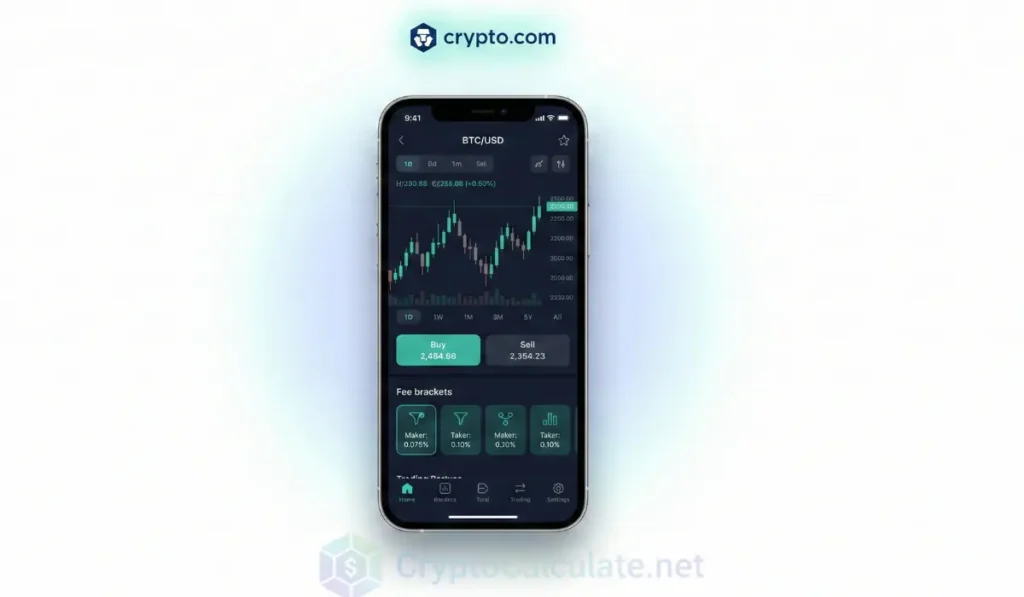
Some users trade directly from their phones. They want simple placement, clear charts, and low cost.
- Crypto.com fits this pattern due to its mobile focused design
Scenario 4: Compliance Focused Holder
Some users prefer an exchange that follows strict reporting rules even if they trade a few times each month.
- Gemini ActiveTrader works well for this user type
Full Fee Comparison Table
| Exchange | Maker Fee | Taker Fee | Notes |
|---|---|---|---|
| Binance US | Very low | Very low | Tight spreads and fast fills |
| Kraken | Low | Moderate | Strong liquidity and stable books |
| Crypto.com | Tier based | Tier based | Wide token range and strong mobile layout |
| Coinbase Advanced | Low | Low | Better pricing than regular Coinbase |
| Gemini ActiveTrader | Low | Moderate | Strong compliance and clean reporting |
How to Compare Low Fee Exchanges
Numbers alone do not determine the best platform. You must look at liquidity, execution speed, reporting quality, and overall protection. These parts influence your long term results more than expected.
Liquidity Depth
Deep liquidity keeps spreads narrow. Your entries and exits become cleaner when more participants trade the same pairs.
Stability During Movement
- A stable platform handles peak activity without sudden shifts.
- Stable routing reduces slippage and keeps your total cost under control.
Reporting Features
Clear reporting helps you analyze your progress. You can use the Crypto ROI Calculator on CryptoCalculate.net when you want accurate return numbers.
Token Availability
A wider list of assets helps you trade specific sectors. You get more trading ideas when your exchange supports several tokens.
Security Factors You Should Understand
Low fees should not come at the cost of weak protection. A strong security setup keeps your funds safe and helps you trade confidently.
Cold Storage
Most user funds should remain offline to reduce exposure during incidents.
Two Factor Protection
Activate two factor authentication to protect your account.
Insurance and Compliance
Some exchanges maintain insured balances for US dollar holdings. Compliance rules keep operations transparent.
Internal Monitoring
Advanced monitoring systems detect unusual activity. This reduces risk during sudden movements.
Best Exchange by Trading Style
- Lowest overall trading fees: Binance US
- Best liquidity and low spread movement: Kraken
- Best mobile focused fee structure: Crypto.com
- Best Coinbase environment pricing: Coinbase Advanced
- Best protection with reasonable cost: Gemini ActiveTrader
Frequently Asked Questions
Which exchange has the lowest trading fees
Binance US usually keeps the lowest levels for both maker and taker fees.
Do spreads influence my total cost
Yes. Wider spreads increase your cost even if your platform has low trading fees.
Are crypto trades taxable in the US
Yes. You can read the IRS digital assets guidelines at https://www.irs.gov/digital-assets for clear information.
Final Thoughts
Low trading fees play an important role in shaping your total return. You feel their impact over time, especially when you place several orders in a short period. I tested different platforms during quiet and busy periods and noticed that overall cost depends on both liquidity and fee structure.
You can compare fees, check spreads, review reporting tools, and track your performance using the Crypto PnL Calculator on CryptoCalculate.net. When you match your trading style with a platform that fits your budget and comfort level, you gain better control over your progress.