
Crypto trading in the United States works under a different level of structure. You deal with strict regulations, clear reporting rules, and high expectations for security. The market feels wide when you scroll through charts, yet narrow when compliance steps block some global platforms.
Now here’s the thing, you need a platform that runs smoothly on busy days and stays accountable when the market moves through heavy volatility. You also want an exchange that keeps your identity and funds protected while still giving you deep liquidity for the tokens you trade the most.
This long guide walks through how crypto exchanges operate in the US, what the compliance layers mean for you, and which platforms perform well when measured by speed, liquidity, protection, fee structure, and user confidence. The reason is quite clear. A strong exchange supports your decisions and keeps your activity organized without friction.
How Crypto Exchanges Operate in the US
Crypto exchanges in the US work under clear financial rules. They register with FinCEN as money service businesses and follow strict Anti Money Laundering checks. You complete identity verification before you place your first order. This keeps the system clean and reduces fraud. It also creates a traceable structure around deposits, withdrawals, and order execution.
Trading engines on US exchanges manage high volume order books and route orders through internal liquidity systems. You can open spot positions, access order types like limit and stop limit, and track depth charts in real time.
As you know, the US market also expects clean documentation, because of which most exchanges generate order history files and tax reports. You can track your profit or loss using tools like the Crypto PnL Calculator at CryptoCalculate.net when your activity increases.
You can check the Form 8949 instructions to understand how crypto gains are reported during tax season.
Why US Traders Need a Trustworthy Exchange
A dependable exchange matters because your largest risk is not always price volatility. Sometimes the real risk comes from weak protection, unclear fee rules, or poor liquidity that creates wide slippage. The thing is that consistency matters more than anything. You want your deposits to land on time, your orders to fill at the right price, and your history to stay visible whenever you review your trades.
US traders also deal with specific tax rules, due to which clean reports become important. Platforms that track your trade-by-trade numbers reduce stress when you organize your year. Many traders check numbers with the Crypto profit Calculator on CryptoCalculate.net when they calculate their returns with clear formulas.
US Regulations and Why They Matter
Compliance rules shape your exchange choices. Not every global platform works in the US because the regulatory framework limits what each company can operate. Here’s a breakdown of what matters:
You can read a detailed breakdown of trading concepts on Binance Academy, which covers market structure, liquidity patterns, and risk controls in a beginner friendly format.
Registration
Exchanges register with FinCEN and follow the Bank Secrecy Act. You complete KYC checks during onboarding. Your identity supports safer transactions and reduces the chance of fraud on your account.
Reporting Rules
Every exchange keeps transparent records of deposits, withdrawals, and executed trades. These records support IRS reporting during tax season.
Asset Protection
Cold storage, insured balances, and withdrawal controls keep your funds protected. Many US exchanges store large parts of their reserves offline. This reduces risks during security incidents.
Order Transparency
Regulated platforms keep clear rules on spreads, order routing, and fee structures. You can view charts with full depth visibility and examine market movement with accuracy.
Now let’s move to the part that matters most for your daily activity.
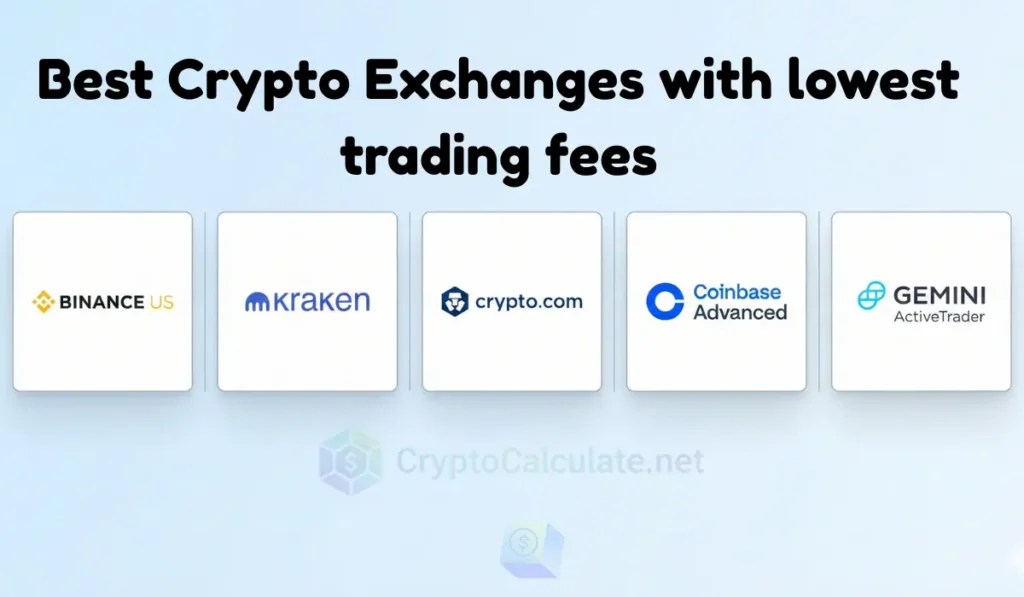
The Best Crypto Exchanges in the United States

1. Coinbase
Coinbase remains one of the most used platforms among US customers. The layout feels clean and easy to move through, and the trading engine manages strong liquidity for major pairs. I used it on my Mac once during a volatile evening and noticed that order fills stayed consistent. You must have noticed that Coinbase keeps a calm feel even when markets move quickly.
Supported Assets:
More than one hundred fifty crypto assets across spot markets.
Security Design:
- Cold storage for most reserves
- Strong two factor protection
- Insurance for US dollar balances
Fee Structure:
Standard maker and taker fees based on your volume. Debit card purchases come with additional charges. You can also fund through ACH transfers.
Best Use Case:
Beginner and mid level traders who want a steady interface and strong liquidity for mainstream tokens.
2. Kraken
Kraken carries a reputation for deep liquidity and strong protection. This is one of the oldest active exchanges in the market. It runs both a regular interface and its advanced platform for serious traders. Kraken Pro offers high performance charts and multiple order tools. Sometimes the interface feels dense for new users, but experienced traders enjoy the level of control.
Supported Assets:
More than eighty cryptocurrencies and several fiat currencies.
Security Design:
- High cold storage ratio
- Advanced monitoring systems
- Strong track record with no major incidents
Fee Structure:
Maker and taker fees vary by activity, with lower fees for high volume users.
Best Use Case:
Traders who want strong liquidity and advanced charting without noise.
3. Binance US
Binance US focuses entirely on the domestic market with a trading engine designed for speed. You get deep liquidity on top spot pairs. I placed a test trade in BTC USD once during a slow afternoon and the fill came immediately. That’s how it works on a strong liquidity pool.
Supported Assets:
More than eighty supported assets.
Security Design:
- Strong internal controls
- Proof of reserves
- Two factor authentication
Fee Structure:
Standard maker and taker fees with some of the lowest levels among US platforms.
Best Use Case:
High frequency traders who want tight spreads and fast execution.
4. Crypto.com
Crypto.com built a strong presence in the US market with a modern interface and wide asset support. The mobile app compresses a lot of detail without feeling heavy. Sometimes the price screens update faster than expected, especially when you track midcap tokens. That’s why many mobile traders use this platform.
Supported Assets:
More than two hundred fifty digital assets.
Security Design:
- Strong encryption
- Large insured coverage
- Cold storage for most holdings
Fee Structure:
Maker and taker fees follow a tier system based on your activity.
Best Use Case:
Active retail traders who want a modern layout and wide token selection.
5. Gemini
Gemini operates under strong regulatory protection. The platform was built with a clean interface that fits both long term holders and institutional users. It carries a reputation for trust because of its security audits and compliance checks.
Supported Assets:
More than seventy supported assets.
Security Design:
- High compliance
- Regular audits
- Cold storage for long term reserves
Fee Structure:
Maker and taker model with levels that shift based on volume.
Best Use Case:
Users who want a strong compliance environment and long term protection.
USD balances on regulated platforms follow FDIC insurance rules, so you can read the guidelines to understand what kind of protection applies.
Real User Scenarios
Scenario 1: You trade Bitcoin and Ethereum weekly
A trader who manages weekly entries needs low spreads and steady liquidity. Kraken and Binance US work well because both hold deep books during US trading hours.
Scenario 2: You buy small amounts of crypto each month
A user who buys small amounts regularly may prefer Coinbase for its predictable interface and clean flow.
Scenario 3: You keep most funds in storage
Long term holders may feel comfortable with Gemini because of its strong compliance environment.
Scenario 4: You trade from your phone during the day
Crypto.com fits this pattern because the app feels responsive on both iPhone and Android.
Comparison Table
| Exchange | What Stands Out | Best For |
|---|---|---|
| Coinbase | Clean layout and steady liquidity | New and mid level traders |
| Kraken | Deep liquidity and advanced tools | Skilled traders |
| Binance US | Tight spreads and fast engine | High frequency spot users |
| Crypto.com | Modern mobile layout | Active retail traders |
| Gemini | Strong compliance environment | Long term holders |
Market caps and circulating supply data are easy to check on CoinMarketCap, which gives a clean view of how each asset moves over time.
Fee Comparison Table
| Exchange | Maker Fee | Taker Fee | Other Notes |
|---|---|---|---|
| Coinbase | Varies by activity | Varies by activity | Debit card purchases carry extra cost |
| Kraken | Low to moderate | Low to moderate | Better fees for high volume |
| Binance US | Very low | Very low | Strong for active spot trading |
| Crypto.com | Volume based | Volume based | Smooth mobile tracking |
| Gemini | Higher than others | Higher than others | Strong security history |
Security Focus for US Traders
You need to understand the layers of protection an exchange uses. Here are the core elements.
- Cold Storage: Exchanges store large reserves in offline wallets. This reduces attack exposure.
- Account Controls: Two factor authentication, biometric login, withdrawal protection, and device tracking help protect your account.
- Insurance Coverage: Some exchanges carry insurance on US dollar balances and limited protection for digital assets.
- Internal Monitoring: Platforms run systems that track suspicious activity. This reduces risk for you and the overall platform.
Security analysts discuss crypto risk patterns on the Chainalysis blog, where you can see how exchanges build internal monitoring systems.
Best Exchange by Trading Type
- For long term storage: Gemini and Coinbase
- For deep liquidity: Kraken and Binance US
- For mobile trading: Crypto.com
- For wide token selection: Crypto.com
- For clean onboarding: Coinbase
FAQs
Which exchange works best for beginners
Coinbase stays familiar for new users because the layout feels natural and buttons sit where you expect them.
Which exchange keeps the deepest liquidity
Kraken and Binance US usually maintain strong order books for major tokens.
Can you trade on global exchanges from the US
You use platforms that operate legally inside the country. Some global exchanges do not run services in the US.
Are crypto trades taxable in the US
Yes. Capital gains rules apply. You can organize your numbers using the Crypto Tax Calculator at CryptoCalculate.net.
Final Thoughts
A strong exchange in the US supports your trading rhythm with clear order routing, detailed books, and transparent fees. Your ideal platform depends on what you trade, how frequently you place orders, and how much detail you need on your screen.
I tested many platforms through different market cycles and noticed that each one responds differently during busy hours. You should track how you trade and match it with a platform that supports your pattern. So finally, a bit of research before your first deposit keeps everything steady later.